
Designing Homes That Stay Comfortable in the Heat: A Practical Guide

As summers get hotter and heatwaves more frequent, keeping your home comfortable isn’t just about cranking up the air‑conditioning. Smart design choices - many of which are surprisingly simple - can make your home feel cooler, reduce energy bills and improve day‑to‑day comfort. Whether you’re renovating, building, or just looking for small upgrades, here’s how to design a home that stays comfortable in the heat.

Start with passive cooling you can use right away
Passive cooling means keeping a home comfortable without relying fully on powered cooling. Some changes cost little, and many can start today.
Use your home’s orientation to your advantage
The direction your home faces affects how much heat it gains during the day.
In the UK and other northern hemisphere regions, south-facing rooms usually get the most sun across the day. East-facing rooms get morning sun, while west-facing rooms often overheat in the late afternoon and early evening. North-facing rooms tend to stay cooler.
This matters when deciding how to use rooms. A west-facing spare room may feel fine in winter but become uncomfortable as a summer bedroom. If your main bedroom gets strong evening sun, cooling it will take more effort than cooling a shaded room on the north or east side.
Simple ways to respond include:
Keep west-facing curtains or blinds closed before the afternoon sun hits.
Use cooler north-facing rooms for daytime work, play, or rest during heatwaves.
Move heat-sensitive furniture, pet beds, and children’s play areas away from sun-trapped rooms.
Improve airflow without renovating
Airflow works best when air can enter low and leave high, or move from a shaded side of the home to a warmer side.
Try a night-time ventilation routine during hot spells. Open windows once the outside temperature drops below the indoor temperature. If it is safe to do so, open windows on opposite sides of the home to create cross-ventilation. Close them again in the morning before the day heats up.
Fans can help this process. Place one fan near a cooler window to draw air in, or near a warm window facing outwards to push hot air out. Ceiling fans also make rooms feel cooler by moving air across skin, even when the actual room temperature stays the same.
Use thermal mass in everyday materials
Thermal mass refers to materials that absorb and release heat slowly. Stone, tile, concrete, brick, and dense plaster can all help moderate indoor temperatures.
A tiled floor in a shaded room can feel cool underfoot because it absorbs heat more slowly than carpet. Stone floors and internal brick walls can also help, especially when you ventilate at night so they can release stored heat before the next day.
The key is shade. Thermal mass that sits in full sun all afternoon can store unwanted heat and radiate it back into the room later.
Choose design features that keep heat outside
Some of the biggest comfort gains come from exterior design. The aim is simple: stop direct sun landing on walls, windows, and roofs for long periods.
Pick roof shapes and overhangs that cast shade
Roofs take the full force of summer sun. A light-coloured, reflective roof surface can reduce heat absorption, while good roof ventilation helps trapped hot air escape.
Deep eaves and overhangs are especially useful on sunny sides of the home. They shade high summer sun while still allowing lower winter sun to enter. This is one reason traditional hot-climate homes often have verandas, shaded walkways, and wide roof edges.
If you are extending or re-roofing, ask how the roof design will affect summer comfort, not just rainwater drainage and appearance.
Add porches and shaded outdoor rooms
A porch, covered patio, pergola, or shaded side return can act like a buffer zone. Instead of sun hitting glass doors and external walls directly, it lands on the shade structure first.
These spaces also make summer living easier. A shaded outdoor room can stay usable during warm parts of the day, which reduces the need to cool every indoor space at once.
Good options include:
A covered porch outside a sunny entrance.
A pergola over patio doors, fitted with climbing plants or shade cloth.
A retractable awning over large glazed doors.
Side screens where low-angle sun slips under the main shade.

Plan room layout around summer comfort
For new builds, extensions, and major renovations, layout matters. Bedrooms are often more comfortable on the cooler side of the home, especially if they are used at night after a hot day.
Living rooms and kitchens can tolerate more daylight, but they also generate heat from people, cooking, and appliances. If they face west, plan strong shading and easy ventilation from the start.
A practical layout puts:
Bedrooms on cooler north or east sides where possible.
Utility rooms, bathrooms, and storage spaces on hotter sides as a thermal buffer.
Large windows where they gain useful daylight without causing afternoon overheating.
Upgrade windows, shading, and materials where they count
Glass is often the weak point in a hot home. A well-insulated wall may stay fairly cool, while a sunny window can turn the room into a greenhouse.
Know what to look for in glazing
Triple glazing significantly reduces heat transfer compared with older single‑glazed or basic double‑glazed windows, and modern units often include Low‑E coatings. Low‑E glass uses a thin, transparent layer that reflects part of the heat while still allowing plenty of natural light into the home.
Triple glazing helps keep heat out in summer and retain warmth in winter, but it’s also important to consider how much solar gain you actually want. A sunny room may benefit from glass that limits summer heat build‑up, however windows can provide useful winter solar gains that reduce heating demand. Choosing glass that reflects too much heat year‑round can mean missing out on this free winter warmth.
Because glazing affects comfort, energy use, and seasonal performance, a holistic approach is essential. The best strategy depends on your home’s orientation, shading, local climate, and how each room is used. It’s always worth seeking professional advice to choose the right combination of glazing types and coatings for your specific home.
If replacement windows are not realistic, reflective window film can reduce glare and some heat gain. It works best on problem windows that get strong direct sun. Check that it suits your type of glass before installing it, as some films are not suitable for every glazing unit.
Insulated curtains and thermal blinds can also help. For best results, fit them close to the window reveal and close them before the sun hits the glass.
Use exterior shading before interior shading
Shading outside the glass is usually more effective than shading inside, because it blocks heat before it enters.
Homeowners can install many options without major building work:
Awnings over patio doors.
External roller blinds or shutters.
Shade sails fixed to suitable anchor points.
Brise-soleil style slats above sunny windows.
Removable bamboo or fabric screens for balconies and terraces.
Interior blinds still help, especially pale-backed blinds, cellular blinds, lined curtains, and shutters. They are more effective when fully closed during the hottest part of the day. Motorised blinds can make this easier, as they can close on a schedule while nobody is home.
Choose materials that reflect and resist heat
Material choices affect how much heat the building absorbs.
Cool roofing products use lighter colours or reflective finishes to reduce solar heat gain. Homeowners may be able to choose reflective tiles, coated metal roofing, or suitable roof coatings depending on the roof type and local planning rules.
Insulation also matters in hot weather. Loft insulation slows heat moving down from the roof space into rooms below. Wall insulation can reduce heat transfer through sun-exposed walls, as long as ventilation and moisture control are handled correctly.
For exterior finishes, paler colours usually absorb less heat than dark ones. Render, cladding, masonry paint, and paving all influence the temperature around a home. A dark patio beside full-height glazing can radiate heat back into the room. Lighter paving, planting, or shade can make that area feel cooler.

Use landscaping to lower the temperature around your home
The area outside your home shapes the air that reaches it. A shaded, planted garden will usually feel cooler than bare paving, gravel, or artificial turf in strong sun.
Plant shade trees in the right spots
Deciduous trees are useful near south and west-facing walls. They provide shade in summer, then drop leaves in winter when daylight and warmth are welcome.
Plant trees far enough from foundations, drains, and roofs, and choose species suited to the space. A small garden may suit a compact ornamental tree better than a large canopy tree. The aim is shade without future maintenance problems.
West-facing trees can be especially valuable because late afternoon sun is often the hardest to deal with.
Use pergolas, vines, and hedges
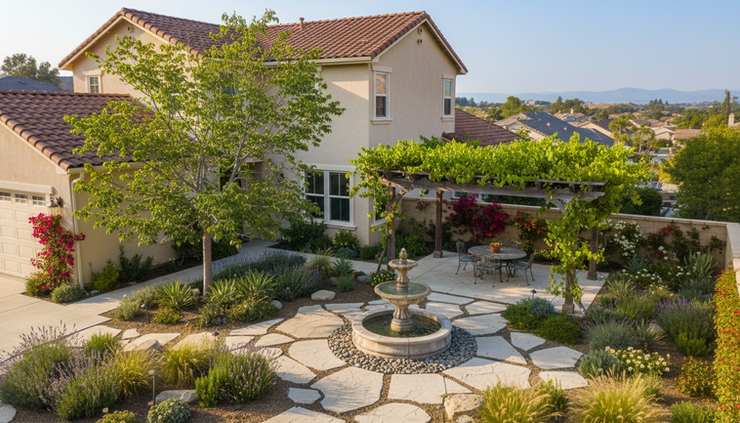
Pergolas with climbing plants can shade patios, glass doors, and seating areas. Vines such as grape, wisteria, or climbing roses can create dense seasonal shade, though they need regular pruning.
Hedges and trellises can block low-angle sun and reduce reflected heat from neighbouring walls or fences. They also make outside spaces more pleasant by softening wind, glare, and hard surfaces.
Create cooler microclimates with water and planting
Small water features can cool the immediate area as water evaporates, especially in a shaded courtyard or patio. They will not cool a whole house, but they can make a seating area feel fresher.
Combine water with planting for a better effect. Pots, shrubs, trees, and ground cover all reduce heat stored in hard surfaces. Even replacing a strip of paving with planting can lower the temperature near a sunny wall.
Cool efficiently and prepare for hotter summers
Good design lowers the cooling load. Efficient systems then handle the heat that still gets in.
Use fans and AC together
Fans cost far less to run than air conditioning and can make a room feel more comfortable at higher temperatures. Use fans when the air is warm but not extreme. Turn them off in empty rooms, as they cool people rather than the room itself.
If you use AC, pair it with closed blinds, shut windows and good insulation. Do not make the system fight direct sun and open doors. Set a sensible temperature rather than trying to make the room cold quickly. A steady, moderate setting often works better than repeated blasts.
Know when a heat pump makes sense
An air source heat pump can provide heating in winter and cooling in summer if the system is designed for it. It makes most sense when the home is well insulated, draughts are controlled, and emitters or indoor units are properly sized.
For some homes, cooling from a heat pump will be occasional support during heatwaves. For others, especially highly glazed or loft-heavy homes, it may become part of a wider comfort plan. A qualified installer can assess what is suitable.
Smart thermostats can reduce waste by cooling only when needed. Automated blinds can close before rooms overheat, rather than after the damage is done.
Use solar to offset cooling costs
Solar panels often produce well on sunny days, which can align with cooling demand. The match will not be perfect, especially in the evening, but solar can help offset daytime fan, pump or AC use.
Battery storage may increase self-use for some homes, but costs and benefits vary. Start by reducing heat gain first. It is usually cheaper to block heat than to generate extra electricity to remove it.
Plan for future heatwaves
Heatwaves are becoming a bigger design concern for homeowners. Long-term resilience means looking beyond the next summer.
Useful upgrades include:
Better loft insulation and roof ventilation.
External shading on the hottest windows.
Lighter roof or wall finishes when replacement is due.
Secure night ventilation, such as lockable window positions or vents.
Backup cooling for vulnerable rooms, especially bedrooms.
Local climate projections can help with major decisions. Look for expected changes in summer temperatures, heatwave frequency, and night-time temperatures for your region. For UK homes, check guidance from trusted public sources, local authorities and building professionals familiar with overheating risk.
Government support, grants, and standards change over time. Before starting major work, check current national schemes, local council support, planning rules and building regulations. Some energy-efficiency upgrades may also improve heat resilience when planned well.
Build cooler habits into daily life
Design helps most when daily habits support it. The basic pattern is simple: let cool air in when it is cooler outside, then keep heat out when the day warms up.
A good summer routine looks like this:
Open windows in the evening when outdoor air cools.
Use fans to flush warm air out overnight where safe.
Close windows, blinds, and curtains in the morning.
Cook outdoors or use smaller appliances during hot spells.
Run dishwashers, washing machines, and tumble dryers later in the evening if they add heat indoors.
Switch off unused electronics and lighting.
Move rugs off tiled or stone floors so the surface can help absorb heat.
Seasonal adjustments also help. Fit summer curtains before the first heatwave, clean fan blades, test blinds, trim shading plants, and clear loft ventilation paths. Small jobs done early can make the hottest week of the year much easier.
The best approach is layered. Shade the glass, lighten the roof, insulate the loft, plant for shade, and use efficient cooling only when needed. That is how cooling-focused design lowers bills while keeping rooms liveable.
A cooler home does not need to waste energy. Start with the hottest room, work out where the heat is coming from, then choose the simplest fix that blocks, reflects, stores, or removes that heat. Each improvement makes the next one work harder, and the whole home becomes more comfortable without leaning on expensive cooling all summer.


Comments